
 In the full trailer of the Roland Emmerich doomsday movie 2012, a solar eclipse effect is shown. Lately, the image of the total solar eclipse has been used by movie-making people in connection with the ancient Mayan civilization. Mel Gibson's Apocalypto is one example where a total solar eclipse plays a pivotal role in one of the movie's turning points.
 So now we have 2012, which is based on the belief that the end of the world is to occur near the end of that year because it's also the time when the Mayan calendar ends. Now, we may have our personal beliefs and some of you may actually believe this or at least feel apprehension regarding it - which isn't really bad when it comes to getting publicity for the movie, it's still all a matter of speculation and a big waiting game, similar to the millennium bug issue. But we digress. It's the eclipse effect that you should pay attention to in this post.
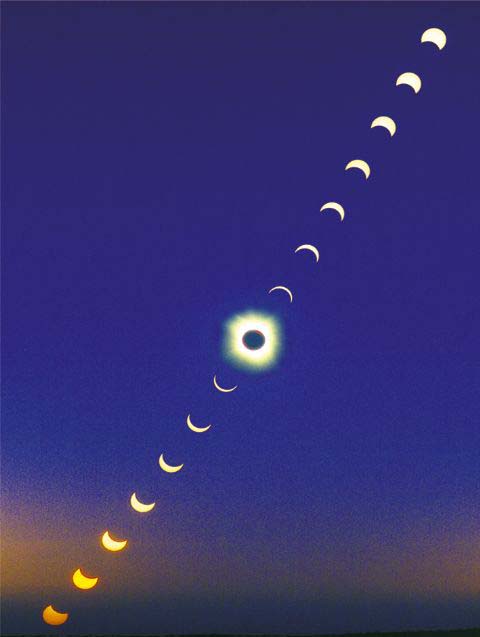
 If you watch the 2012 trailer, you might not notice anything wrong with the eclipse shown, and even astronomers may take a second look. But if you notice the way the moon creeps over the sun's face (from left to right, in the trailer) you'll see that it has a bite, like a cookie. It should really appear like a full circle that slowly covers the sun. Although the "bite" can arguably be called a flaring effect that only happens just before totality.
Flaring is really the result of overexposure from the bright light of the exposed part of the sun not covered yet by the moon. The 2012 trailer footage makes it appear that flaring occurred sooner than it should. Catch the trailer of 2012 here.

 2012 is directed by Roland Emmerich, who also gave us Independence Day, Stargate, The Day After Tomorrow, and 10,000 B.C. It stars John Cusack and Amanda Peet.
Click here to know why the splitting-ceiling effect of the destruction of Sistine Chapel in 2012 could have been done with more care.


 Posts
Posts


